
What is FIP Supportive Care?
FIP supportive care is an important part of caring for a cat during the first days of treatment. While antiviral therapy is the foundation of FIP treatment, a sick cat may also need support with hydration, nutrition, nausea, pain, temperature regulation, and other complications. The first 72 hours can be particularly important for stabilizing your cat and monitoring their response to treatment.
But starting treatment is only part of the equation.
The first 24–72 hours of FIP treatment can be especially important for a sick cat. Some cats are dehydrated, nauseated, painful, weak, hypothermic, or unwilling to eat. Supportive care during this period can help stabilize the cat while antiviral treatment begins to take effect.
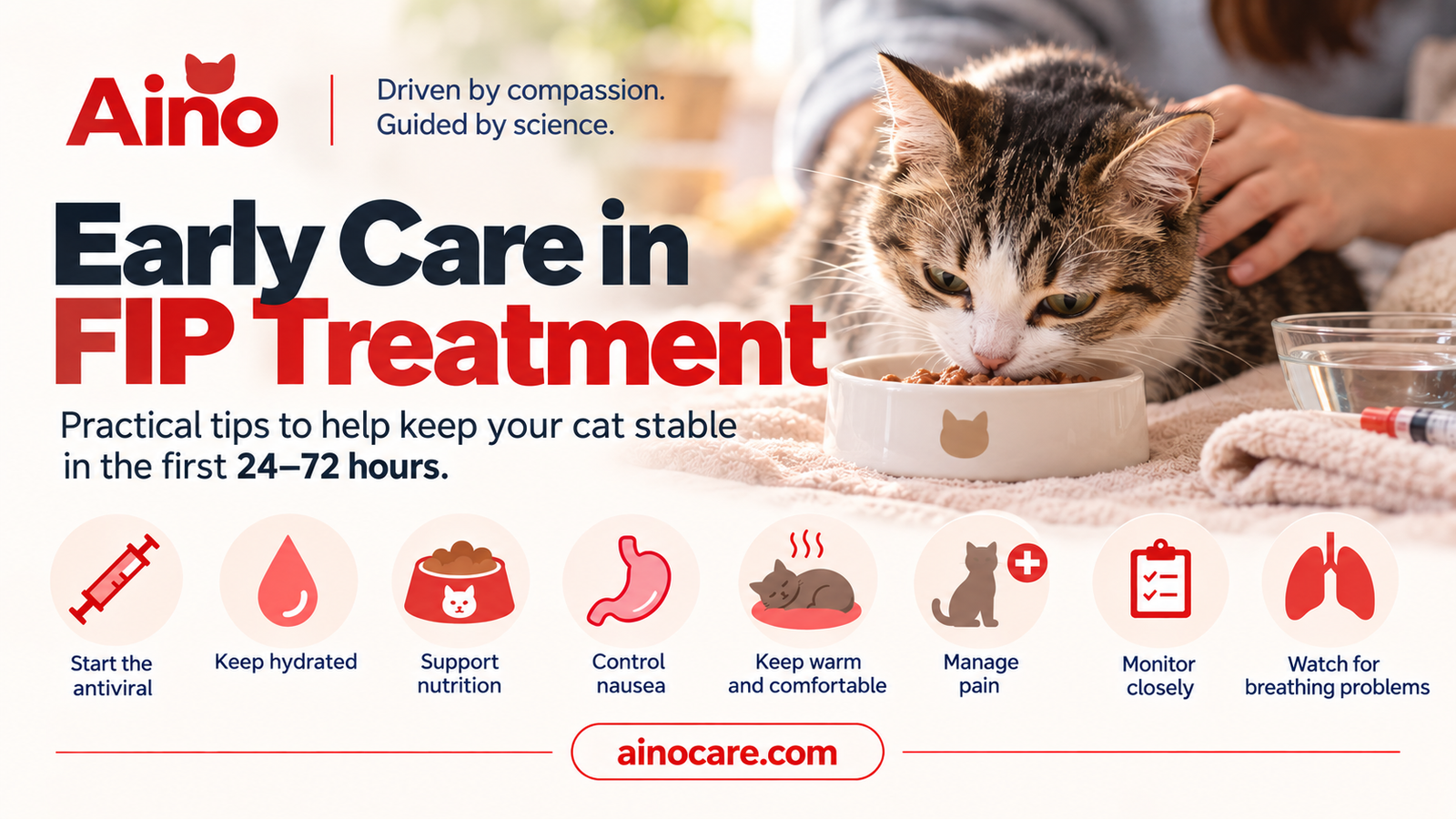
Here are eight practical priorities for caring for a cat during the early days of FIP treatment.
1. Start antiviral treatment as soon as appropriate
When FIP is strongly suspected or diagnosed and the veterinarian is comfortable beginning treatment, delaying effective antiviral therapy may not be helpful.
Current FIP guidelines recognize antiviral treatment as the foundation of successful FIP management. Oral GS-441524 is now widely used, and cats can show clinical improvement relatively quickly after effective treatment begins.
The exact antiviral, dose, route, and treatment duration should be determined according to the individual cat’s condition and veterinary guidance.
This is particularly important because FIP does not look the same in every cat. Neurological and ocular FIP, for example, may require different treatment considerations from uncomplicated systemic disease.
Do not focus only on the medication
An antiviral is essential, but a very sick cat may also need fluids, anti-nausea medication, nutritional support, pain control, or hospitalization.
The goal during the first few days is not simply to “give the medicine.” It is to stabilize the cat and create the best conditions for recovery.
Looking for antiviral treatment for FIP?
Aino GS-441524 is available in injectable and oral tablet formulations. Learn more about available strengths, treatment considerations, and how to use GS-441524 appropriately with veterinary guidance.
2. Keep your cat hydrated
Dehydration can quickly make a sick cat feel worse.
Cats with FIP may become dehydrated because they are not eating or drinking normally, have fever, are vomiting, or have fluid shifts associated with the disease.
Your veterinarian may recommend:
- Intravenous (IV) fluids
- Subcutaneous fluids
- Hospitalization and fluid therapy
- Monitoring of hydration status and electrolytes
The appropriate fluid plan depends on the cat’s clinical condition.
Do not automatically give fluids at home
More fluids are not always better. Cats with certain complications, including heart disease or fluid accumulation, may require particularly careful fluid management.
If your veterinarian has not specifically instructed you to give subcutaneous fluids at home, ask before doing so.
Veterinary supportive care is considered an important component of FIP treatment, particularly in cats that are severely ill.
3. Support nutrition early
Calories matter.
A cat recovering from FIP needs energy and nutrients, but nausea, fever, pain, stress, and gastrointestinal problems can make eating difficult.
Instead of expecting a sick cat to eat a large meal, try offering:
- Small, frequent meals
- Highly palatable wet food
- Easily digestible food
- Food warmed slightly to increase aroma
- Several food options if necessary
If your cat refuses food, do not simply wait indefinitely.
Products we found helpful: Royal Canin Recovery Liquid, Virbac Nutri-Plus Gel
A veterinarian may also consider appetite-supporting medication, anti-nausea treatment, assisted feeding, or a feeding tube depending on the situation.
Why nutrition matters
Prolonged inadequate food intake can contribute to weakness and muscle loss, making recovery harder.
At the same time, forcing food into a nauseated or poorly swallowing cat can create additional problems. Feeding decisions should therefore be individualized, especially when vomiting, severe nausea, neurological disease, or gastrointestinal motility problems are present.
4. Control nausea and vomiting
A cat that feels nauseated may refuse both food and water.
Sometimes what looks like “picky eating” is actually nausea.
Signs can include:
- Lip licking
- Excessive swallowing
- Drooling
- Turning away from food
- Approaching food and then walking away
- Vomiting
- Reduced appetite
Veterinarians may use anti-nausea medications such as maropitant or ondansetron when appropriate. Metoclopramide may also be used in selected cases, including for nausea and certain gastrointestinal motility problems.
The important point is that nausea should be treated rather than simply waiting for appetite to return.
Once nausea is controlled, some cats become much more willing to eat and drink.
5. Keep your cat warm, quiet, and comfortable
A severely sick cat can have difficulty maintaining normal body temperature.
Provide a calm, warm environment with soft bedding and easy access to food, water, and a litter box.
Avoid unnecessary handling, excessive stimulation, and stressful environmental changes.
However, warm does not mean overheated.
Use safe external warmth and make sure your cat can move away from the heat source. Never place a sick or weak cat directly against a heating pad without appropriate protection and supervision.
Stress reduction is also important. Feline-friendly handling and minimizing unnecessary stress are recommended during FIP treatment.
6. Manage pain
FIP can be painful.
Pain may occur with abdominal inflammation, organ involvement, or other complications of the disease.
A cat in pain may:
- Hide
- Become unusually quiet
- Resist handling
- Have a hunched posture
- Move less
- Stop eating
- Seem restless or unable to settle
Tell your veterinarian if your cat appears uncomfortable.
Appropriate veterinary pain relief can be an important part of supportive care. Current FIP guidance specifically emphasizes individualized analgesia alongside antiviral treatment.
Never give human pain medication unless your veterinarian specifically instructs you to do so.
Some medications that are safe for people can be dangerous or fatal to cats.
7. Monitor your cat closely
During the first few days, small changes can provide valuable information.
Keep a simple daily record of:
- Body weight
- Food intake
- Water intake
- Urination
- Stool
- Temperature, when practical
- Breathing rate and effort
- Energy and alertness
- Vomiting or diarrhea
- Abdominal swelling
- Eye changes
- Neurological changes
Weight is particularly useful
Regular weighing helps your veterinarian assess progress and can also help determine whether the antiviral dose needs to be adjusted as a recovering cat gains weight.
Current FIP guidelines specifically recommend regular weight monitoring during treatment because failure to account for weight gain can result in underdosing.
Do not interpret one isolated measurement in isolation. Look at the trend.
A cat that gradually becomes brighter, starts eating, maintains hydration, and gains or stabilizes weight is generally giving you more encouraging information than a single laboratory value alone.
8. Watch carefully for breathing problems
Some cats with FIP develop fluid accumulation in the chest or other complications that can affect breathing.
Seek urgent veterinary attention if your cat develops:
- Rapid breathing
- Labored breathing
- Open-mouth breathing
- Blue, gray, or very pale gums
- Severe restlessness associated with breathing difficulty
- Collapse
Open-mouth breathing in a cat is an emergency.
Do not wait to see whether it improves on its own.
If your cat is struggling to breathe, minimize handling and transport them to an emergency veterinary facility as quickly and safely as possible.
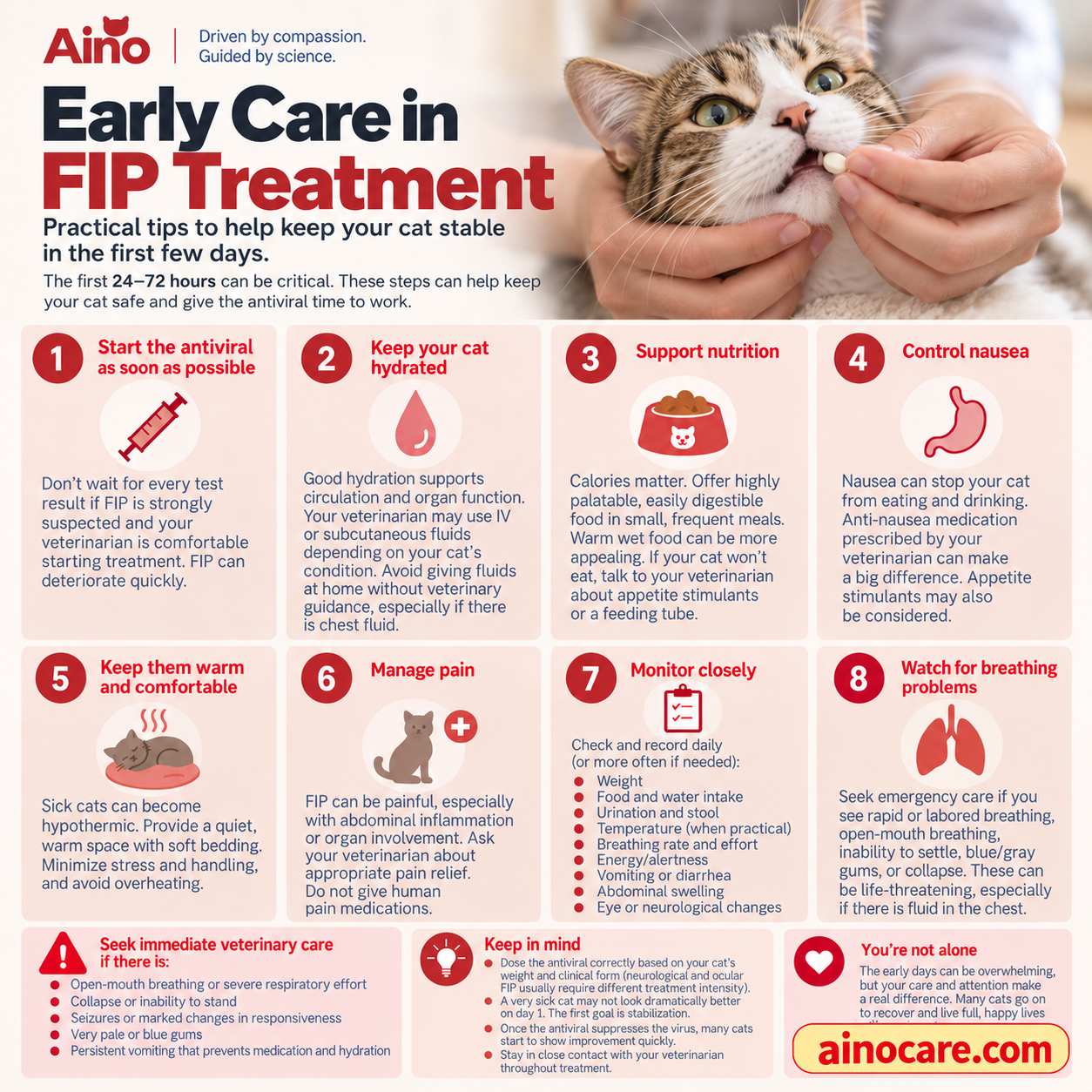
When to Seek Immediate Veterinary Care
Contact a veterinarian urgently if your cat develops:
- Open-mouth breathing or severe respiratory effort
- Collapse or inability to stand
- Seizures
- Marked changes in responsiveness
- Very pale, gray, or blue gums
- Persistent vomiting that prevents medication or hydration
- Severe weakness or rapid deterioration
These signs can indicate a serious complication requiring immediate intervention.
What Improvement Can Look Like After Starting FIP Treatment
One of the encouraging features of effective antiviral treatment is that some cats begin showing noticeable improvement relatively quickly.
You may see:
- Improved alertness
- Greater interest in food
- Reduced fever
- Improved hydration
- Increased activity
- Improved comfort
However, recovery is not always linear.
A cat may have good days and bad days, particularly early in treatment. Some laboratory abnormalities can also take longer to normalize than the cat’s outward clinical signs.
The important thing is to monitor the overall trend and maintain communication with your veterinarian.
Current guidelines report that many cats respond very well to antiviral treatment, but individual outcomes vary depending on disease severity, FIP presentation, complications, and other health factors.
What If My Cat Is Too Sick to Take Oral Medication?
Most cats can be treated with oral antiviral medication, and current guidance supports oral GS-441524 as an effective treatment option.
However, there are situations in which a cat may be too sick to take or absorb oral medication effectively.
For example, injectable GS-441524 may be considered in severely unwell cats that cannot tolerate oral medication, cats with certain severe neurological presentations, or cats that cannot be medicated orally for another reason. Once the cat is stable enough, treatment may transition to oral GS-441524.
This decision belongs with the veterinary team caring for the cat.
Do Not Stop Supportive Care Just Because the Antiviral Has Started
It is tempting to think of the antiviral as the entire treatment.
It isn’t.
A cat with FIP may still need:
Antiviral treatment + hydration + nutrition + nausea control + pain management + monitoring
The appropriate combination depends on the individual cat.
The 2026 ABCD FIP guideline specifically emphasizes prompt and intensive veterinary supportive care for cats that are severely affected by FIP.
The First Goal Is Stabilization
When a cat is very sick, the first victory may not be a dramatic one.
It may be:
- Drinking a little water
- Eating a few bites
- Standing up
- Grooming
- Using the litter box
- Becoming more alert
- Sleeping comfortably
- Breathing more easily
These small improvements matter.
The objective of the first few days is to stabilize the cat, control complications, and give antiviral treatment the opportunity to work.
With modern antiviral therapy and appropriate supportive care, FIP is now a treatable disease for many cats.
You Are Not Alone
The first days after an FIP diagnosis can feel overwhelming. There may be medications to organize, veterinary visits to manage, feeding difficulties, weight checks, laboratory tests, and a long list of things to watch.
Take it one step at a time.
Give the antiviral correctly. Keep your cat hydrated. Support nutrition. Control nausea and pain. Monitor closely. Know the emergency warning signs. And stay in contact with your veterinarian throughout treatment.
Early, attentive care can make a meaningful difference.
Final Takeaway
The first 24–72 hours of FIP treatment are about more than starting an antiviral.
The priorities are straightforward:
- Start appropriate antiviral treatment promptly
- Maintain hydration
- Support nutrition
- Control nausea
- Keep your cat warm and comfortable
- Manage pain
- Monitor closely
- Act quickly if breathing or other emergency signs develop
FIP can be a frightening diagnosis, but today’s treatment landscape is very different from the past. With appropriate antiviral therapy, supportive care, careful monitoring, and veterinary guidance, many cats with FIP can recover and go on to live normal, happy lives.
FAQ
1. How quickly should FIP treatment start?
When FIP is strongly suspected or diagnosed and the veterinarian considers antiviral treatment appropriate, treatment should not be unnecessarily delayed. Current guidelines emphasize determining the likelihood of FIP promptly because effective antiviral therapy can produce clinical improvement within days in responding cats.
2. Can a cat recover from FIP?
Yes. Modern antiviral treatment has dramatically changed the prognosis for FIP. Published evidence and current veterinary guidelines report high success rates with nucleoside analogue antivirals, particularly GS-441524.
3. What should I feed a cat with FIP?
Offer highly palatable, easily digestible food in small, frequent meals. Warm wet food can sometimes make it more appealing. If a cat is not eating adequately, speak with your veterinarian about nausea control, appetite support, assisted feeding, or nutritional support.
4. How do I know whether my cat is improving?
Look at the overall trend. Increased alertness, improved appetite, better hydration, improved comfort, and stable or increasing body weight can all be encouraging signs. Regular monitoring is important because individual cats can improve at different rates.
5. Does every cat with FIP need hospitalization?
No. The appropriate level of care depends on the cat’s severity and complications. Some cats can be managed at home with veterinary supervision, while severely ill or unstable cats may require hospitalization, IV fluids, injectable medications, oxygen support, or other intensive care.
6. Can I treat FIP without a veterinarian?
FIP treatment should ideally be managed with veterinary involvement. A cat with FIP can have serious complications that require treatment beyond the antiviral itself, including dehydration, anemia, neurological disease, respiratory compromise, pain, nausea, and other concurrent conditions. Veterinary guidance is particularly important when a cat is severely ill.
If your cat is suspected of having FIP
Ask your veterinarian questions. Understanding what each test is looking for, what its results can and cannot tell you, and what other conditions are being considered can make an overwhelming situation easier to navigate.
Most importantly, don’t feel that you need to understand every laboratory abbreviation or diagnostic test overnight.
Your veterinarian’s job is to interpret the findings in the context of your individual cat.
FIP can be a complicated diagnosis. But with a careful, systematic approach, the pieces can begin to come together.
Driven by compassion, guided by science | ainocare.com
This article is intended for educational purposes and should not replace veterinary examination or individualized diagnostic advice. FIP can resemble other diseases, and diagnostic testing should be selected and interpreted by a veterinarian based on the individual cat.