
Is FIP Contagious?
This is one of the first questions many cat parents ask when a beloved cat is diagnosed with feline infectious peritonitis (FIP), especially when there are other cats at home.
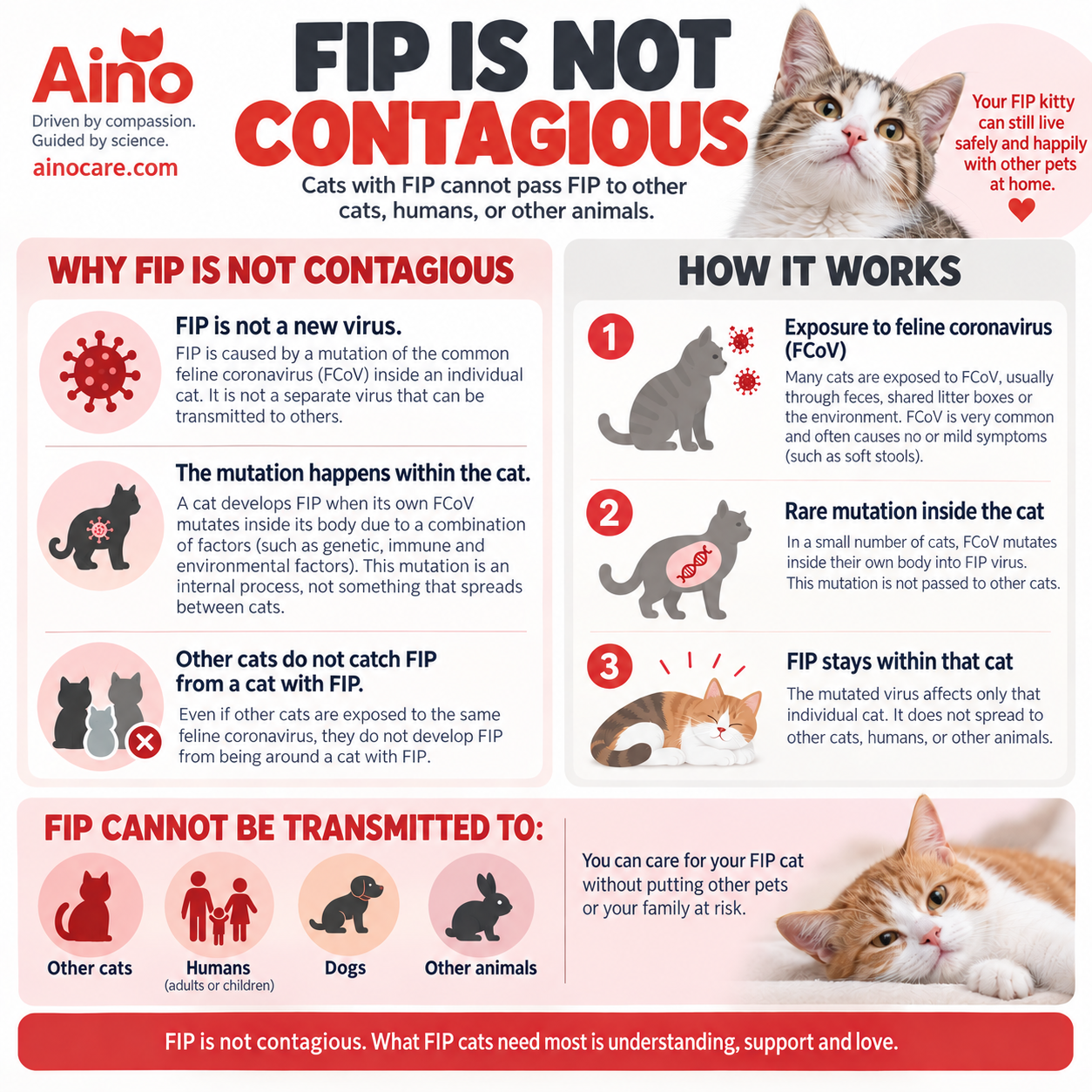
The good news is that FIP itself is not generally considered contagious from one cat to another. What is contagious is feline coronavirus (FCoV), a very common virus that infects cats, usually without causing serious illness. In a small proportion of infected cats, changes in the virus and the cat’s immune response are associated with the development of FIP.
This distinction is important because it means that a cat diagnosed with FIP is not simply “spreading FIP” to the other cats in the household.
FIP vs. Feline Coronavirus: What Is the Difference?
Feline coronavirus, or FCoV, is widespread in cat populations. It is primarily an intestinal virus and is commonly transmitted through fecal contamination, particularly through litter boxes and contaminated objects. Many infected cats have no noticeable symptoms, while some may experience mild gastrointestinal signs such as diarrhea.
FIP, on the other hand, is the severe disease that develops in only a small proportion of cats infected with FCoV. Current FIP guidelines describe mutations and other viral changes occurring within an infected cat as an important part of the transition toward an FIP-associated form of the virus. The cat’s immune response also plays an important role, and researchers have not identified one single mutation that explains every case.
In simple terms: FCoV can spread between cats. FIP generally does not.
How Does a Cat Develop FIP?
Think of feline coronavirus as the starting point, not the final disease.
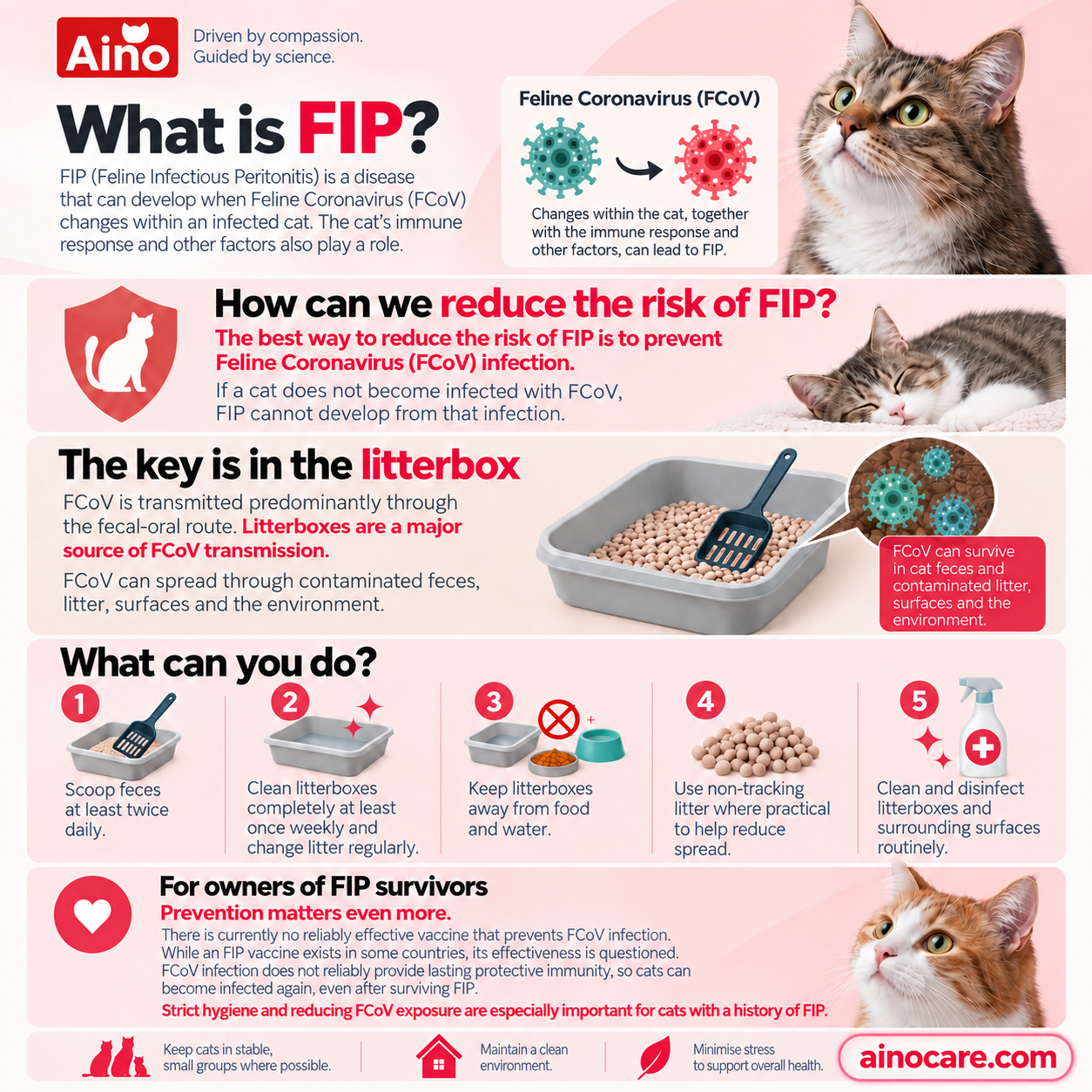
A cat may first become infected with FCoV through exposure to virus shed by another cat. The virus is especially efficiently transmitted through fecal-oral contamination, which is why litter boxes and the surrounding environment are important sources of exposure.
In most cats, this does not progress to FIP.
In a small percentage, however, the virus undergoes changes within the cat. These changes can alter which cells the virus can infect and how it behaves in the body. FIP develops through the interaction between the virus and the cat’s immune system, producing the intense inflammatory disease associated with FIP.
This is why FIP is not best understood as a disease that one cat simply “catches” from another cat with FIP.
Can Another Cat Catch FIP From a Cat With FIP?
Generally, no.
The FIP-associated form of feline coronavirus is believed to spread between cats only very rarely. The prevailing understanding remains that FIP usually develops through viral changes within an individual infected cat rather than through straightforward transmission of FIP from a sick cat to another cat.
This also explains something that can be confusing for multi-cat households: when one cat develops FIP, other cats in the home may already have been exposed to the same underlying feline coronavirus, but that does not mean they will develop FIP.
In fact, most cats infected with FCoV never develop FIP.
An Important Scientific Nuance
“FIP is not contagious” should not be interpreted as “nothing related to FIP can ever spread.”
Researchers continue to investigate unusual outbreaks and FIP-associated coronavirus variants. The large 2023 outbreak of FIP in Cyprus, for example, raised questions about whether particular viral variants may have unusual transmission characteristics. Current ABCD guidelines note evidence suggesting that the FIP-associated FCoV-23 variant may have been transmitted between cats, although the virus still appeared to require further change after transmission to produce FIP in the infected cat.
Cornell researchers are also studying how different FCoV variants influence both transmissibility and disease severity. Their recent work on FCoV-2 highlights that some unusual coronavirus variants can have different biological properties from the more common feline coronaviruses.
These findings are important for researchers, but they do not change the practical message for the typical household cat with FIP: FIP is not considered a readily contagious disease like feline panleukopenia, calicivirus, or herpesvirus.
Can Humans Catch FIP?
No evidence indicates that FIP is a zoonotic disease.
Feline coronavirus is regarded as a feline infection, and veterinary references do not consider ordinary feline coronavirus infection a significant zoonotic risk. Cornell specifically notes that feline coronaviruses are not known to pass from infected cats to humans.
So there is no reason to fear that caring for a cat with FIP will give the disease to people in the household.
The same principle applies to dogs and other non-feline household pets: FIP is a feline disease, and it is not considered something that a cat with FIP will transmit to dogs or humans.
Should a Cat With FIP Be Isolated?
This is where the distinction between FIP and FCoV becomes especially useful.
A cat with FIP does not necessarily need to be treated like a cat carrying a highly contagious infection. Separating a sick cat solely out of fear that it will “give FIP” to the other cats can create unnecessary stress, and stress itself is a factor associated with FIP development.
However, household hygiene still matters because FCoV can spread between cats.
The ABCD recommends practical measures to reduce FCoV transmission, particularly in multi-cat environments. These include:
- removing feces frequently
- maintaining clean litter boxes
- providing an appropriate number of litter trays
- minimizing overcrowding
- reducing environmental stress
In other words, the goal is not to panic about a cat “spreading FIP.” The goal is to manage feline coronavirus exposure and overall household health.
What About Other Cats in the Home?
Having a cat with FIP does not mean that every other cat in the household is going to develop FIP.
The reality is that many cats have already encountered FCoV, particularly those living in multi-cat environments. Yet only a small proportion of infected cats go on to develop FIP.
Other cats should therefore be monitored normally, with particular attention to persistent signs such as reduced appetite, weight loss, unexplained fever, lethargy, abdominal or chest fluid accumulation, or neurological or ocular abnormalities.
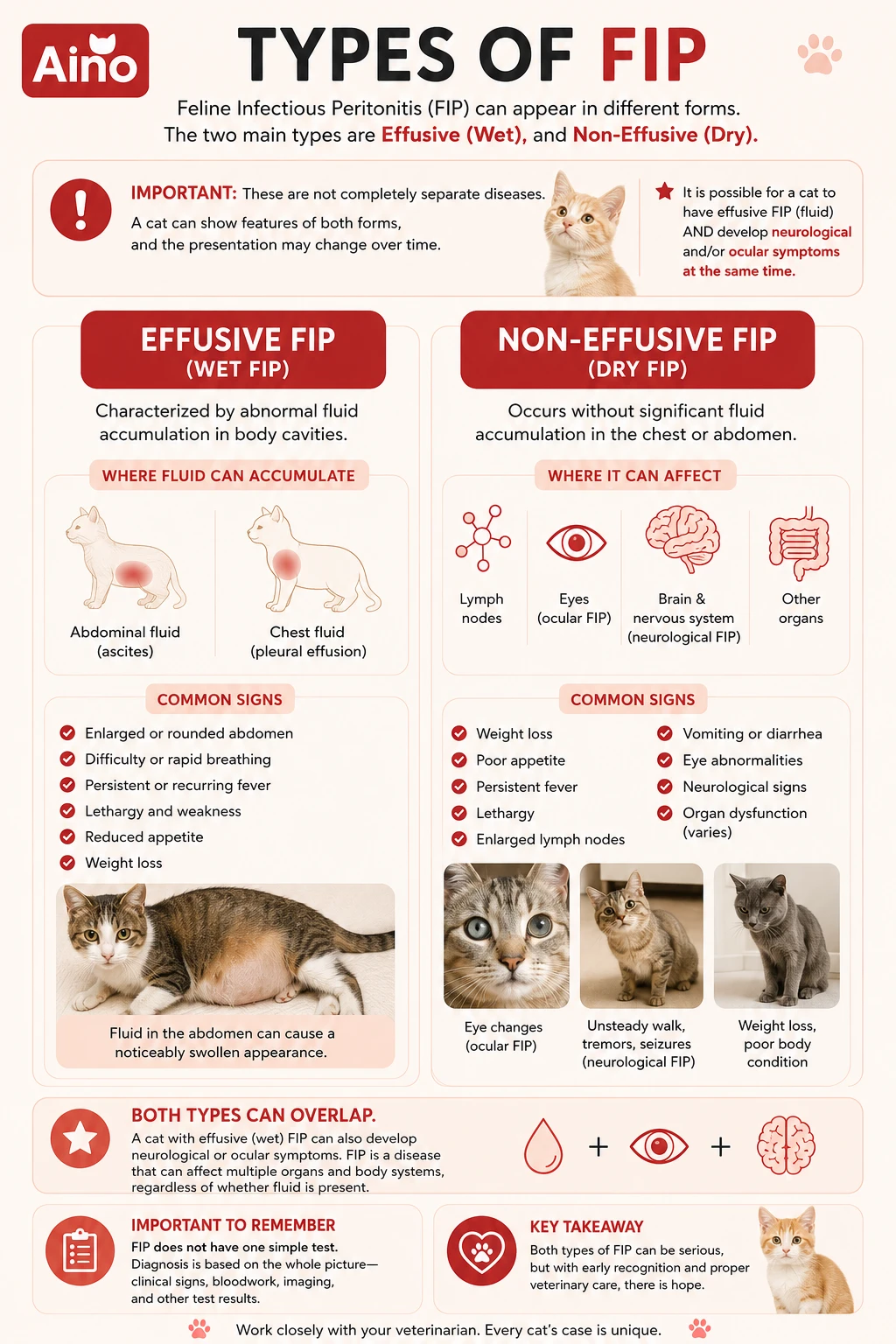
Most importantly, do not assume that a positive FCoV test means a cat has FIP. Detecting feline coronavirus only tells you that the cat has been exposed to or infected with FCoV. It does not, by itself, establish a diagnosis of FIP.
Preventing FCoV Spread: Managing a Multi-Cat Home
Completely eliminate FCoV from every multi-cat household will take time and effort. Good hygiene and reducing stress can help limit transmission.
For an FCoV-positive or multi-cat home:
- Scoop litter boxes frequently, ideally as soon as possible after defecation.
- Provide one litter box per cat, plus one extra, and keep them away from food and water.
- Clean litter boxes and surrounding areas regularly to reduce fecal contamination.
- Avoid overcrowding and provide each cat with adequate food, water, resting spaces, and hiding places.
- Reduce household stress and avoid unnecessary changes to the cats’ environment.
- Wash your hands after cleaning litter boxes and before handling food.
The goal is not to create a sterile environment. FCoV is common, and most infected cats do not develop FIP. Good environmental hygiene is simply a sensible way to reduce fecal-oral transmission while supporting the cats’ overall wellbeing.
Does a Positive Coronavirus Test Mean FIP?
No.
This is one of the most important misconceptions to clear up.
FCoV is common, and cats without FIP can test positive for the virus. For this reason, a fecal FCoV PCR test, coronavirus antibody test, or other test detecting FCoV cannot simply be interpreted as “positive for FIP.” Diagnosis of FIP requires the veterinarian to consider the entire clinical picture, including history, physical examination, bloodwork, imaging, fluid analysis, cytology, and, when appropriate, FCoV testing of affected tissues or body fluids.
This is why FIP is a clinical diagnosis, not a strip test.
The Bottom Line for Cat Parents
A diagnosis of FIP can be frightening, particularly when there are other cats in the home. But there is an important difference between worrying about FCoV transmission and worrying about FIP transmission.
FCoV is contagious. FIP generally is not.
FIP usually develops when feline coronavirus undergoes important changes within an individual cat, together with the cat’s immune response and other host factors. Other cats may be exposed to FCoV, but they do not simply catch FIP from living with a cat that has the disease.
Good hygiene, sensible litter-box management, appropriate housing, and stress reduction remain important, particularly in multi-cat homes. But a cat with FIP should not be viewed as a danger to the family.
Your FIP cat still needs the same thing every sick cat needs: good veterinary care, comfort, understanding, support, and love.
Frequently Asked Questions
1. Can a cat with FIP live with other cats?
In many households, yes. FIP itself is not generally considered contagious between cats. Other cats can, however, be exposed to FCoV, which is why good litter-box hygiene and sensible household management remain important.
2. Shoud I quarantine a cat with FIP?
Not simply because the cat has FIP. FIP is not managed like highly contagious feline diseases such as panleukopenia. Isolation may sometimes be recommended for other medical or household-management reasons, but fear of directly transmitting FIP is not, by itself, a reason to panic.
3. Can my other cats catch Feline Coronavirus from a cat with FIP?
They may be exposed to FCoV, yes. FCoV commonly spreads through fecal contamination and is particularly relevant in multi-cat environments. However, exposure to FCoV does not mean that another cat will develop FIP.
4. Can a cat get FIP from another cat?
FIP is generally not acquired by directly catching the disease from another FIP cat. FIP usually develops through changes involving FCoV within an individual cat, together with the cat’s immune response and other factors.
5.Can humans catch FIP from cats?
No. FIP is not considered a zoonotic disease, and feline coronaviruses are not known to pass from infected cats to humans.
6. Can dogs catch FIP?
No. FIP is a feline disease and is not considered a disease that cats transmit to dogs.
7. Does a positive FCoV test mean my cat has FIP?
No. FCoV infection is common, and a positive coronavirus test cannot by itself diagnose FIP. FIP diagnosis requires interpretation of multiple clinical and laboratory findings.
8. If one cat in my home has FIP, will my other cats develop it?
Not necessarily. The other cats may have been exposed to FCoV, but most cats exposed to FCoV do not develop FIP. Individual susceptibility, immune response, viral factors, and environmental factors all appear to influence disease development.
9. Is FIP contagious after treatment?
Treatment does not turn FIP into a contagious disease. The main household concern remains the potential circulation of FCoV, not routine cat-to-cat transmission of FIP itself.
If your cat is suspected of having FIP
Ask your veterinarian questions. Understanding what each test is looking for, what its results can and cannot tell you, and what other conditions are being considered can make an overwhelming situation easier to navigate.
Most importantly, don’t feel that you need to understand every laboratory abbreviation or diagnostic test overnight.
Your veterinarian’s job is to interpret the findings in the context of your individual cat.
FIP can be a complicated diagnosis. But with a careful, systematic approach, the pieces can begin to come together.
Driven by compassion, guided by science | ainocare.com
This article is intended for educational purposes and should not replace veterinary examination or individualized diagnostic advice. FIP can resemble other diseases, and diagnostic testing should be selected and interpreted by a veterinarian based on the individual cat.